Doing More with Less
In today’s competitive industrial environment, success is no longer measured solely by how much a company produces. Increasingly, it is also measured by how efficiently it uses its resources.
This is the principle behind Resource Efficient and Cleaner Production (RECP), an approach that helps industries improve productivity while reducing waste, conserving energy and water, and minimizing environmental impact.
For Nigerian industries facing rising production costs, energy challenges, and growing environmental expectations, RECP offers a practical pathway toward long-term competitiveness.
What Exactly is RECP?
Resource Efficient and Cleaner Production is a preventive strategy that focuses on improving processes rather than managing waste after it has already been created.
Instead of asking, “How do we dispose of waste?” RECP asks a better question:
“How do we prevent waste from being generated in the first place?”
The answer often lies in better planning, smarter resource use, improved equipment, staff awareness, and continuous process improvement.
The Business Case
Many people associate environmental sustainability with additional costs.
In reality, RECP often produces the opposite result.
By reducing unnecessary consumption of raw materials, electricity, fuel, and water, businesses can significantly lower operating costs while improving product quality and operational efficiency.
The benefits include:
- Reduced production costs
- Lower energy consumption
- Better resource utilization
- Improved environmental performance
- Increased competitiveness
- Enhanced corporate reputation
These improvements strengthen both profitability and sustainability.
RECP in Action
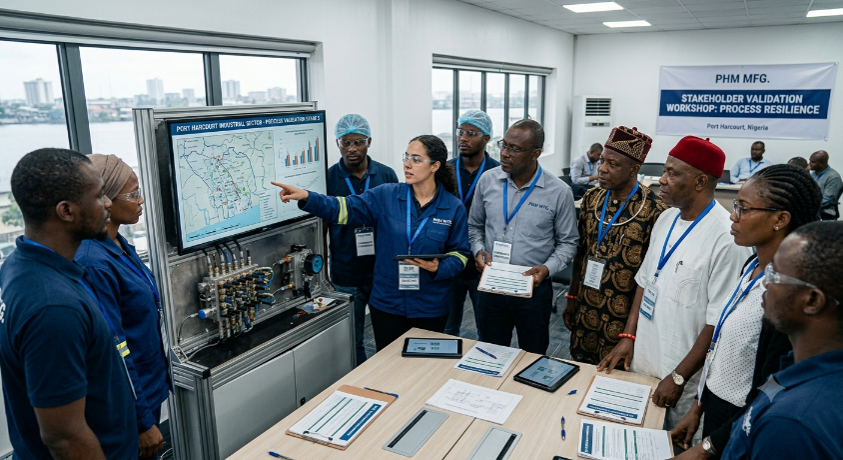
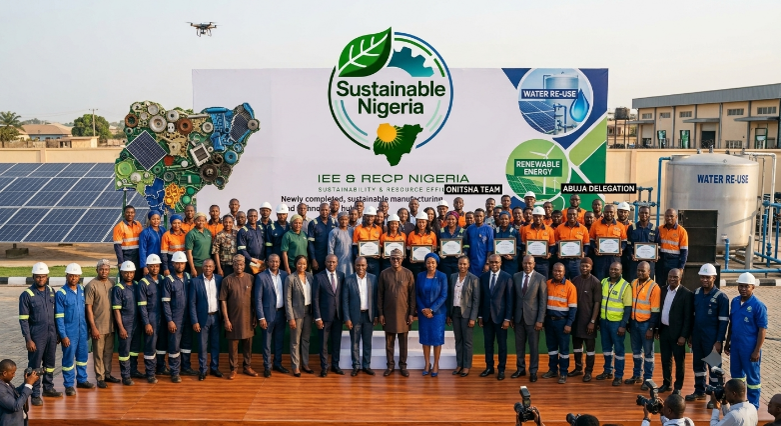
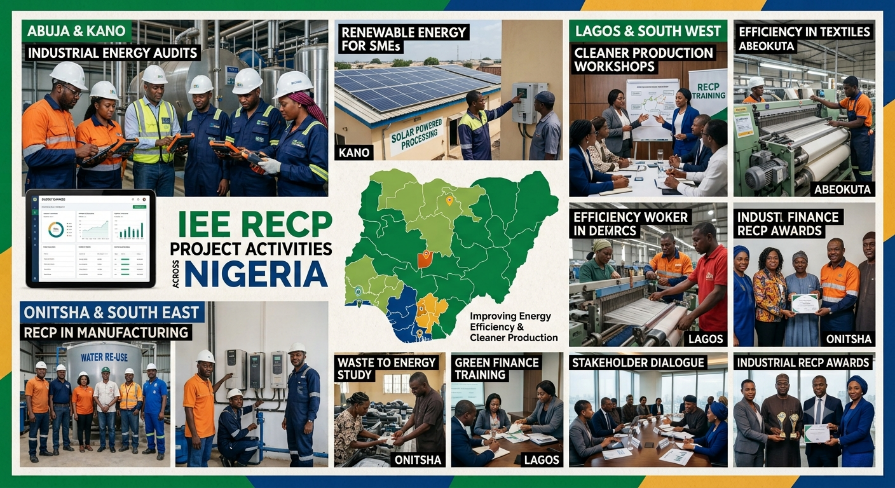
Throughout the GEF–UNIDO IEE & RECP Project, industries across Nigeria were introduced to practical approaches that demonstrated how relatively small operational improvements could generate measurable benefits.
Cleaner Production Assessments helped identify opportunities to optimize production processes, reduce waste streams, improve energy performance, and increase overall efficiency.
These assessments showed that sustainability is not just an environmental objective. It is a business strategy.
Building a Sustainable Industrial Future
As industries continue to modernize, RECP will play an increasingly important role in helping businesses remain competitive while supporting Nigeria’s broader sustainable development goals.
The experience gained through the GEF–UNIDO IEE & RECP Project provides a strong foundation for continued adoption of cleaner production practices across the country.
Sustainability is not achieved through one major change. It is built through hundreds of smarter decisions made every day.